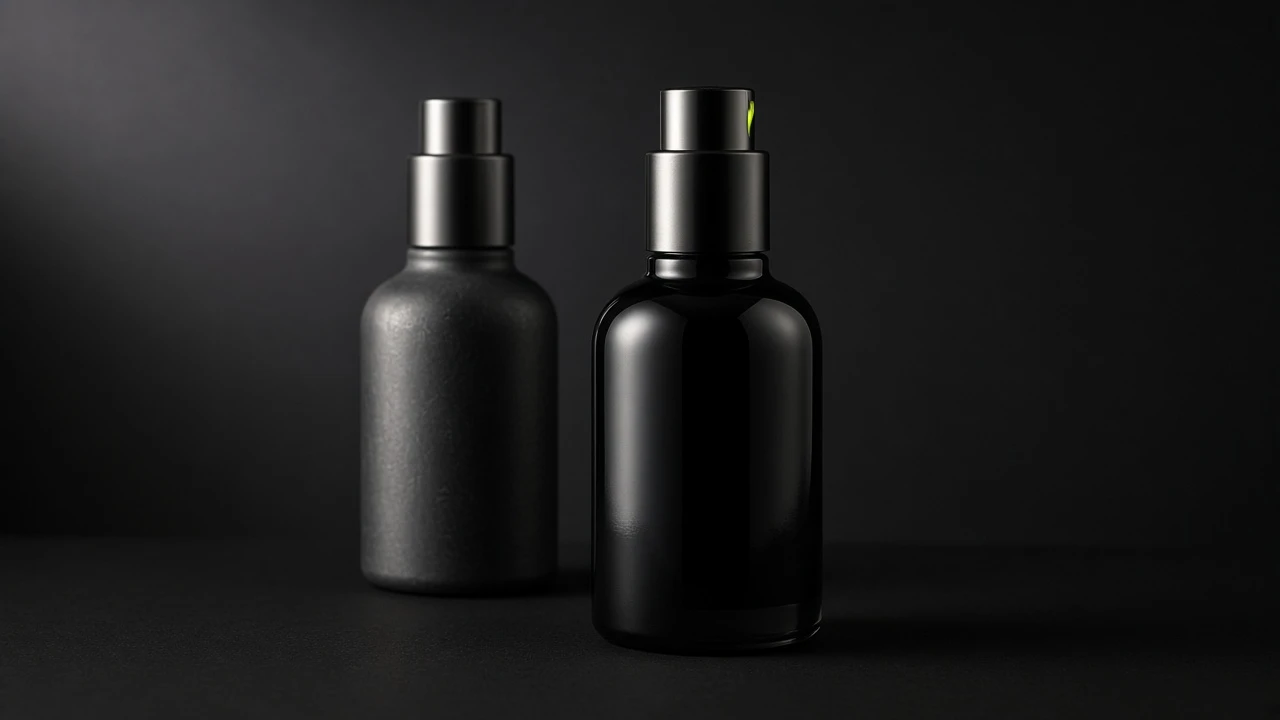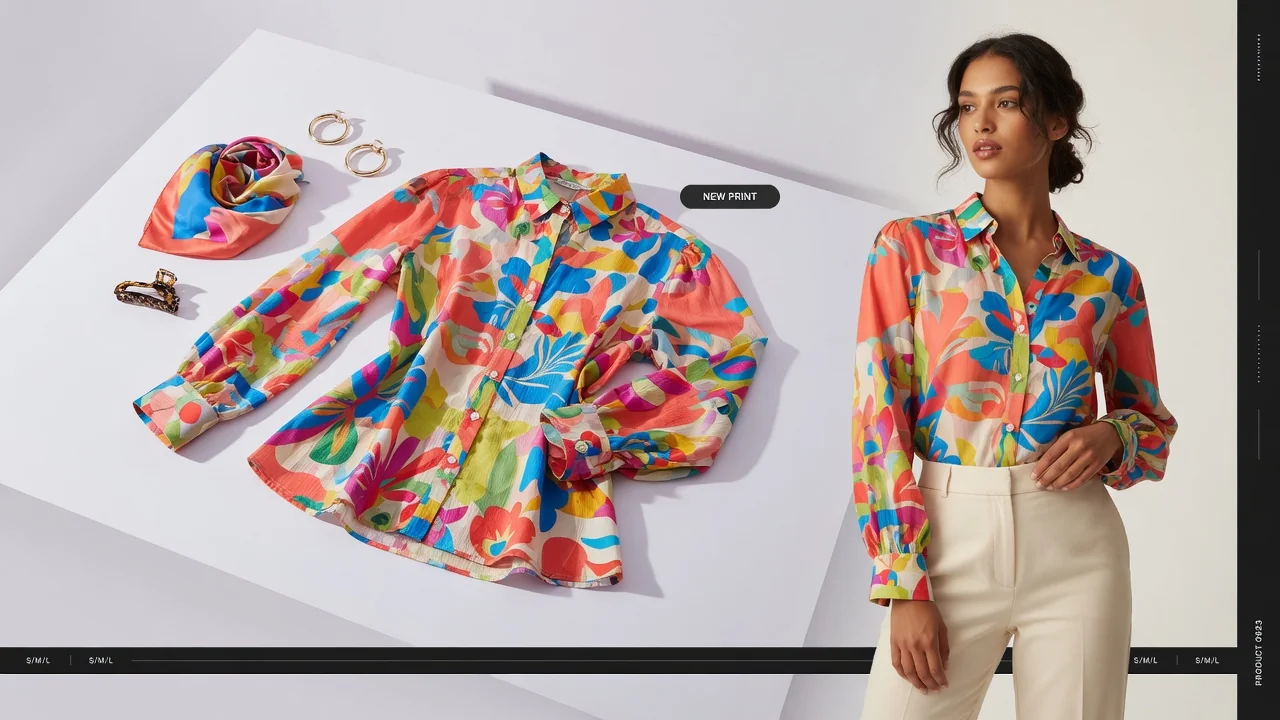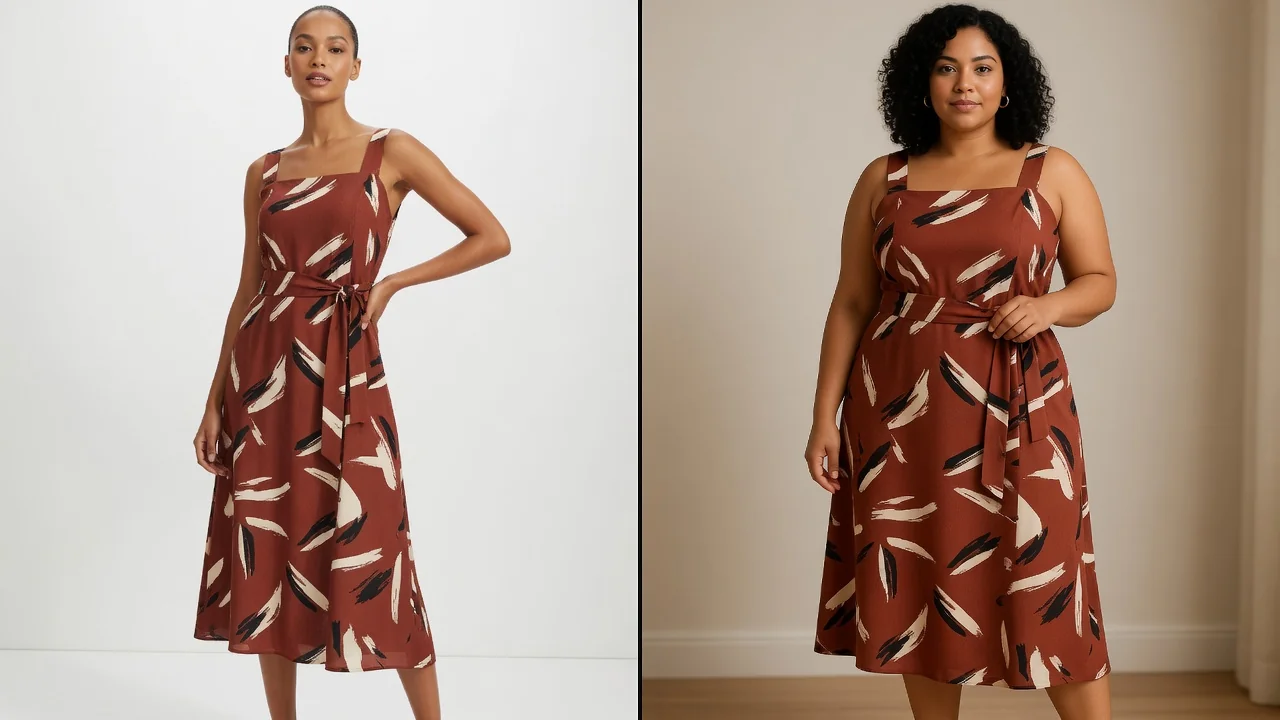

How crowded is ecommerce product photography in 2026? We broke down 10 leading AI tools—from product locks and scene generation to marketplace main images—covering real capabilities, pricing catches, and honest trade-offs.
If you run an ecommerce store, you probably know this scene: launch season arrives, and the operations and design desks look like a disaster zone.
The supplier photos you get handed are almost always rough. Some are snapped on a phone in bad lighting. Others sit on cluttered warehouse tables where you cannot even tell what material the item is made of. Everyone is talking about using AI to fix the mess. But once you start looking at tools, things get confusing fast. Every landing page claims to be magic, and almost none of them work the way you expect once you actually upload a product.
The truth is, these tools were designed for completely different jobs. ProductShot AI targets the high-frequency grind: upload a single image to generate marketplace main images, clean white background shots, and apparel on-model previews. Photoroom is built for quick mobile edits and bulk cutouts on the go. Claid is engineered for tech teams building automated image pipelines with code.
So what is the real story? With dozens of AI tools claiming to handle product photography, which ones actually deliver, and which ones are just hype?
We dug into the public product specs, pricing tiers, and official documentation for 10 leading tools as of early September 2026. We looked at what they make, output consistency, fidelity controls, where you actually use them, how they integrate, and what their published pricing tiers actually deliver. A quick note up front: this is an objective breakdown based on publicly available details, not a lab benchmark run in a darkroom. Use it as a practical reference.
To help you size up each option quickly, we summarized their core strengths, starting prices, and key limitations in the comparison table below:
| Tool | Core Strength / Best For | Product Photo Scope | Starting Price (Public) | Key Limitations |
|---|---|---|---|---|
| ProductShot AI | Single-image generation for ecommerce product shots, white background images, and on-model apparel | Product photography, white background, product beautifier, nine apparel features, image-to-image, and free tools | 10 free credits on sign-up, 10 credits per image; subscription plans start at 800 credits | Per-image credit workspace; no catalog system, no API or batch pipelines |
| Photoroom | Quick mobile editing and batch processing | Scene staging, retouching, apparel models, batch editing, and API | Free tier available; paid mobile app pricing varies by region; API starts at $20/month | Paid subscription required for commercial use and advanced features |
| Claid | API-driven automated image pipelines | Scene generation, apparel imagery, clean-up, upscaling, video, and API workflows | Free trial available; web plans start at $15/month | Web credits and API credits are billed separately and cannot be shared |
| Adobe Firefly | Visual production integrated with Creative Cloud | Image generation, inpainting, reference image control, and Photoshop workflows | Standard plan starts at $9.99/month | General-purpose creative suite, not a dedicated ecommerce catalog system |
| Pixelcut | Mobile editing and lightweight team workflows | Background replacement, object cleanup, upscaling, batch export, and API | Free tier available; Pro starts at $10/month ($8/month billed annually) | Advanced models require shared AI credits and burn through quotas faster |
| Pebblely | Lightweight, intuitive product scene generation | Prompt-based backgrounds, theme presets, multi-aspect ratios, and batch generation | Lite starts at $9/month | Focused strictly on single-image scene generation; lacks a full retouching or editing suite |
| Flair | High-art-direction marketing visuals | Product scenes, custom models, team collaboration, video generation, and tiered API | Free tier available; paid plans start at $8/month | Rapid mode and ad creative generation consume 4x standard credits |
| Canva | Combining product imagery with multi-channel layout design | AI backgrounds, local edits, resizing, and graphic layout design | Free tier available; Pro is $144/year | AI allowances are shared across all tools on the platform, limiting usage |
| Shopify Magic | Quick, lightweight edits directly inside Shopify Admin | Solid color backgrounds, scene generation, and canvas expansion | Free for a limited time on eligible Shopify plans | Generates 1 image at a time at 1 MP resolution; unsaved edits are lost on close |
| Google Product Studio | Free asset creation for Merchant Center sellers | Prompt-based scenes, background removal, upscaling, and short videos (select countries) | Free with an active Merchant Center account | Experimental status; struggles to identify the primary product when multiple items are present |
The prices listed above reflect official pre-tax USD base rates. Keep in mind that annual billing discounts, your country or region, platform choice, export settings, and credit burn rates will affect your actual spend. When budgeting for your workflow, always check the checkout screen.
1. ProductShot AI: Single-Image Generation for Marketplace Main Images, White Backgrounds, and On-Model Apparel
For ecommerce sellers and operations teams tired of wrestling with low-grade supplier photos and rushing to meet launch deadlines, ProductShot AI is a browser-based workspace you can open and use immediately. What is the biggest headache with AI product shots? Unwanted hallucinations—when the model warps your label, drops text, or completely changes the packaging. Its core feature is Product Lock. When you adjust backgrounds, lighting, and camera angles using prompts or presets, it works to preserve your product's silhouette, original colors, surface textures, logo details, and printed packaging text. You can also upload up to 2 reference images to guide the visual aesthetic, or apply platform presets for major ecommerce channels with one click.
What it makes: The feature set focuses squarely on ecommerce utility. The core offering is the AI Product Photography Generator, complete with Product Lock, reference image inputs, shot composition controls, scene styles, lighting controls, camera angles, and platform presets. Next is the AI White Background Generator for marketplace main images, producing clean white, black, gray, or custom hex backgrounds (Amazon's product image requirements, for example, call for a pure white main-image background with the product filling at least 85% of the frame). The AI Product Beautifier outputs at 2K resolution while adding studio-grade lighting and natural ground contact shadows. It also generates everyday lifestyle scenes, listing images, and ad creatives. For apparel brands, it provides nine dedicated clothing features: on-model staging, visual-preview virtual try-on, outfit swaps, pose changes, lingerie, swimwear, wrinkle removal, flat lays, and ghost mannequin effects. Four browser-based utilities require no sign-up: image enhancement, image compression, background removal, and transparent PNG export.
Pricing and access: Billing runs on a credit model. New accounts receive 10 free credits upon sign-up, which covers about 1 image generation so you can test the output. Paid generations cost a flat 10 credits per image. Monthly subscriptions come in three tiers: Starter at 800 credits for $19.9/month, Premium at 2,000 credits for $39.9/month, and Advanced at 6,000 credits for $99.9/month. Annual plans discount these rates by 50%, bringing the effective monthly cost to $9.9, $19.9, and $49.9. If you prefer not to subscribe, one-time credit packs are available at $29.9, $59.9, and $149.9. The four browser utilities are permanently free, and complete plan details are available on the ProductShot AI pricing page. Everything runs in the browser, featuring before-and-after comparison sliders, direct downloads, external sharing links, and personal generation history logs. You can Start for free to test the workflow.
The honest trade-off: To be clear, ProductShot AI is a web workspace that charges per image credit. It does not manage your product catalog, does not offer an external API, and is not designed for automated batch queuing. If your company needs to embed image generation into an in-house system, it is not the right fit.
2. Photoroom: Rapid Batch Retouching Across Mobile App and API
If you run a resale or distribution business from your phone, or cross-list products across multiple marketplaces and social channels, Photoroom is likely already on your device. The tool is built for speed: snap a photo, strip out the cluttered background, drop the item into a clean setting, and publish. For resellers, marketplace sellers, and catalog teams who need to clean up messy source images on the go and standardize visuals in bulk, it is a practical workhorse.
What it makes: It covers background removal, AI background generation, product staging, virtual AI models, object recoloring, contact shadows, batch editing, Brand Kit management, and a dedicated image API. You can cut out a single shot on your phone or process images in batches while keeping a consistent visual style.
Pricing and access: Photoroom is available on web, iOS, and Android. While it offers a basic free tier, note the fine print: the free version cannot be used for commercial purposes. Mobile app subscription prices vary by country and app store. For API access, basic background removal starts at $20/month (for 1,000 calls), while the Plus tier for advanced image editing starts at $100/month (for 1,000 calls). Top-tier plans (Max and above) also support direct integration with Shopify stores. For developers, it provides standard REST APIs and MCP endpoints.
The honest trade-off: Commercial rights, bulk processing limits, and the most capable editing features are strictly locked behind paid tiers. Do not just look at a cheap mobile app subscription when forecasting costs. Add up your monthly export volume and projected API calls with a calculator so your billing does not catch you off guard.
3. Claid: A Modular API Pipeline for Engineering Teams
Moving away from point-and-click tools for operations and design teams, Claid targets a different audience. It was not built for casual, one-off image edits. Its core users are large online marketplaces, software developers, and technical operations teams who process thousands of messy merchant-submitted photos every day and need an automated image processing pipeline.
What it makes: Claid breaks the image creation process into more than 20 programmatic operations. It generates AI product scenes, handles apparel models, executes edits via natural language instructions, replaces backgrounds, adds contact shadows, expands canvas bounds generatively, upscales resolution, and can even turn static product shots into video clips. For enterprise clients, it also offers bespoke processing pipelines.
Pricing and access: A free trial grants 50 web credits and 50 API credits upon sign-up. The web interface starts at $15/month (500 credits), and the Pro plan is $49/month (2,000 credits). Operations run through a web dashboard and a self-serve API console. Select tiers unlock batch processing tools, while enterprise accounts receive custom integration support.
The honest trade-off: The main catch with Claid is that web credits and API credits live in separate pools—they cannot be transferred or shared. In addition, when running API requests, complex chains (such as generating a scene, upscaling to 4K, and rendering video) burn through credits rapidly. If you plan to deploy automated pipelines at scale, build a granular unit-cost model before going into production.
4. Adobe Firefly: Creative Extensions Inside the Creative Cloud Ecosystem
For designers and creative production teams who live in Photoshop and Illustrator, Adobe Firefly is a natural extension of an existing workflow. Its primary advantage is integration: it sits directly inside the Creative Cloud ecosystem. When you hit a roadblock retouching an image, you do not have to export files and jump between platforms; you do the work right inside your project file.
What it makes: It supports text-to-image generation, composition and style transfers guided by reference images, inpainting to replace selected objects or backgrounds, canvas outpainting, resolution upscaling, and creative support for audio and video. Inside desktop Photoshop, it manifests as Generative Fill, Generative Expand, Harmonization, and Super Resolution.
Pricing and access: You can access Firefly through its dedicated web and mobile interfaces, but its real power comes from its native presence inside Photoshop, Adobe Express, Illustrator, and Adobe Stock. Firefly Standard costs $9.99/month, while Firefly Pro is $19.99/month. Enterprise plans offer larger generative credit pools and longer video generation quotas.
The honest trade-off and licensing terms: Keep in mind that Firefly is a broad, general-purpose creative suite, not a specialized platform built for ecommerce SKU launches or product catalog management. Your team still has to handle filing and approval flows on your own. On the training side, Adobe states that its native Firefly models are trained on content it has permission or rights to use. However, Adobe now integrates third-party partner models into its apps as well. Review the license terms for each model individually; do not assume the training disclosures for native Firefly models apply across the board.
5. Pixelcut: A Fast Mobile Editor Built for Lightweight Collaboration
Selling on social channels or running a boutique brand often means you do not want to boot up a laptop just to clean up a product photo. Pixelcut targets this exact workflow. Its mobile app is fluid and fast, syncs cleanly with a web editor, and provides team workspaces with pooled credits, batch exports, and standalone APIs.
What it makes: The tool focuses on high-frequency tasks for independent sellers: staging product scenes, removing backgrounds, cleaning up unwanted objects, expanding image borders, upscaling resolution, and batch exporting. It also supports third-party models and developer APIs.
Pricing and access: You can switch between iOS, Android, and web browsers. It includes team workspaces and offers standalone APIs for background removal, upscaling, scene replacement, virtual try-ons, and image expansion. A free tier lets you test basic cutout and upscaling features. Paid plans start with Pro at $10/month ($8/month billed annually), which includes 600 monthly AI credits and 3 team seats. The Business tier is $30/month ($24/month billed annually).
The honest trade-off: While standard tools are readily available, higher-performing third-party models burn through credits at a faster, variable rate. The total number of clean, finished product photos you get each month depends heavily on which specific model pipelines you use.
6. Pebblely: A Focused Tool for Single-Product Lifestyle Scenes
If you want to skip complex toolbars and simply turn a flat, single-product shot into a natural lifestyle scene, Pebblely is built for that exact use case. The workflow is straightforward: upload a product image, type a short prompt, pick an aspect ratio, and the system isolates the subject and composites the scene without requiring design experience.
What it makes: It generates prompt-based backgrounds, offers over 40 built-in theme presets, supports standard social media aspect ratios, allows reference images on paid tiers to guide the visual style, and provides batch generation on higher plans.
Pricing and access: Pebblely operates as a pure web workspace with direct downloads and batch processing on higher tiers. The pricing tiers are clear-cut: Lite is $9/month (30 images), Basic is $19/month (200 images), and Pro is $39/month (500 images), with discounts available for annual billing.
The honest trade-off and unit economics: Pebblely does one job: composite scenes behind single products. It does not offer multi-layer editing, fine model adjustments, catalog organization, or external APIs. Look at the unit economics: assuming you use every credit and love every shot, the Basic plan costs about $0.095 per image ($19 ÷ 200), and Pro comes out to roughly $0.078 per image ($39 ÷ 500). That math only holds if your rejection rate is near zero. The moment you generate discards, your actual cost per usable asset climbs.
7. Flair: A Design-Led Canvas for Branded Concepts
For direct-to-consumer brands where visual tone and editorial composition matter more than boilerplate product cutouts, generic templates fall short. Flair approaches product photography from a design studio angle, using an interactive canvas workspace to stage scenes, train custom product models, and produce campaign assets and video.
What it makes: Features include product photography generation, AI fashion models, custom subject model training, marketing ad layout composition, animated video clips, upscaling, and localized retouching. It fits both hero product shots and campaign social assets.
Pricing and access: The workspace runs on an interactive web canvas with team collaboration features. The free tier includes 1 custom model and 5 image generation credits. Paid subscriptions start at $8/month, Pro+ is $26/month, and Scale starts at $38/month (unlocking early access to the product photography API; enterprise tiers include unlimited API usage and dedicated technical support).
The honest trade-off: Flair offers creative control, but watch the credit meter: its rapid generation mode and ad composite mode consume 4x standard credits per run. If you rely on rapid prototyping or ad generation, your monthly image yield is effectively cut to a quarter of the advertised headline number.
8. Canva: Layout Design and Product Image Editing Under One Roof
For most ecommerce teams, producing a product image is only step one. Next comes adding promo badges, typing out discount copy, applying brand typography, and formatting banners across different channels. Canva's strength is that it folds AI product generation directly into its graphic design and layout editor.
What it makes: It includes AI scene generation, one-click background removal, Magic Edit for local replacements, Magic Expand for canvas extensions, image sharpening, and access to Canva's extensive catalog of ecommerce templates and brand kits. It takes you from a raw product shot to a finished promotional graphic in a single tab.
Pricing and access: Available via web browser, desktop apps, and mobile apps, Canva supports multi-user collaboration, automated social scheduling, and a broad app marketplace. A free tier offers limited access to design tools. Paid options include Canva Pro for individuals at $144/year and Canva Business at $250 per user/year.
The honest trade-off: Canva's AI allowances are pooled across every generative tool on the platform, making per-image cost tracking murky. More importantly, its core strength is graphic layout. When it comes to studio-grade lighting control, micro-texture rendering, and product fidelity, it cannot match dedicated photography generators.
9. Shopify Magic: Quick Admin Edits Without Leaving Your Store
If you run your store on Shopify, you often do not need to leave your dashboard for simple image tweaks. Shopify built its Shopify Magic media generation tools directly into the admin file manager. You can update product imagery right as you upload inventory.
What it makes: Its feature set is lean: isolate product subjects, add solid or transparent backgrounds, generate new environments from text prompts, and expand canvas borders (Outpainting) on desktop.
Pricing and access: The feature is embedded directly in Shopify's desktop and mobile file editors (with canvas expansion limited to desktop). For a limited time, it is free to use for merchants on active Basic, Grow, Advanced, and Shopify Plus plans, with no additional subscription fee.
The honest trade-off: As a built-in free tool, it has clear constraints. It generates one image at a time at a default 1 MP resolution, embedded with an invisible watermark. Crucially, if you close the editor without saving your work, your generated image is permanently lost.
10. Google Product Studio: Free Asset Creation for Merchant Center Sellers
For sellers already feeding their catalog into Google Merchant Center for Shopping campaigns, Google Product Studio is a free asset studio sitting inside your account. It lets you generate extra creative assets for Shopping listings and promotional campaigns without buying additional software.
When it comes to the tool's limits, Google's Product Studio help page states: “Product Studio works best when you choose one main product image. Select a starting image that only has one main product. Product Studio doesn't work well if it can't easily identify the main product in the starting image.”
What it makes: It supports prompt-based scene generation, theme presets, one-click background removal, resolution enhancement, and converting static product photos into short animated video clips (available in select countries).
Pricing and access: It is completely free to use with an active, compliant Google Merchant Center account. You can access it through the Merchant Center dashboard or via the Google & YouTube app in Shopify.
The honest trade-off: Google labels this as an experimental feature. As the documentation notes, you need clean, isolated source photos. If your input photo has multiple products, people, hands, or props, it is less effective. Additionally, product categories subject to strict advertising regulations and certain regions face extra restrictions. One more thing that is easy to miss: Google requires AI-generated images used in Shopping to keep their IPTC DigitalSourceType metadata so the AI origin stays declared; see Merchant Center's guidance on AI-generated content.
Bonus: 4 Editing and 3D Tools Worth Knowing About
We also see four other tools brought up often alongside the options above. They didn't make our top 10 list because they lean toward general photo retouching or 3D modeling rather than simple generators where you put a raw photo in and get a finished ecommerce shot out. Still, if your team retouches apparel, wants darkroom-grade color grading, or needs multi-angle renders for manufactured goods, they are genuinely useful additions to your stack.
Zeg AI: Virtual studio for 3D renders and animations from a few photos
If you sell consumer electronics, small appliances, or hardware and need to show your products from every angle without paying traditional 3D modeling rates, this one is for you.
What it makes: Upload one to three photos from different angles, and the software reconstructs them into a 3D model. From there, you can place that model into over 100 prebuilt virtual sets, pair it with thousands of virtual props, add your logo or callout text, and export 4K static product images or animated videos.
Pricing and access: Pricing runs primarily on project-based quotes or image bundles, with plans updated often, so check the official site for current rates.
The honest trade-off: Advanced editing controls are fairly limited, so you cannot make deep adjustments to the 3D model itself. Also, once your scene gets slightly complex, rendering takes longer to finish.
Magic Studio: Zero-learning-curve editing driven by text prompts and presets
This fits marketers and store operators with no design background who dread technical sliders and just want to type a quick description or pick a preset to fix a shot.
What it makes: Upload a product photo, brush out any flaws, and type a background description or pick a preset theme to composite your item into a realistic scene. Its built-in 4K upscaler meets the buyer zoom expectations highlighted in Baymard's research on product image resolution and zoom, and it handles lightweight batch exports for social posts, ads, and storefront listings.
Pricing and access: The free plan provides 40 generations at limited resolution, processed one image at a time, while the Pro tier unlocks watermark-free high-resolution downloads; check the Magic Studio pricing page for current monthly rates.
The honest trade-off: Simplicity means giving up granular control. When the AI generates a new background, subject blending can look off or cut into product edges, and there is little you can do manually to correct it.
Evoto AI: Dedicated portrait and apparel retouching with natural shadow retention
This is built for fashion brands and retouchers who shoot live models and care deeply about skin texture, smooth fabrics, and realistic contact shadows.
What it makes: When you have large batches of model lookbooks or flat-lay product shots, it retouches skin, removes blemishes, irons out clothing wrinkles, and even tweaks facial expressions in bulk. Its AI background cutout keeps natural ground shadows so products never look like floating stickers, alongside fine-grained color adjustment tools.
Pricing and access: It operates mainly on an annual subscription where exports require a paid tier; plans shift regularly, so check the official site for current pricing.
The honest trade-off: Its core job is high-end retouching, not building brand-new scenes from scratch. With an annual commitment and paid exports, costs can add up fast when you work through massive image libraries.
Luminar Neo: Photographic layer control and non-destructive lighting adjustments
This suits experienced visual designers and independent photographers who know their way around camera settings, lighting, and color theory, and want to polish individual hero images like they would in a traditional darkroom.
What it makes: This is a desktop-class darkroom app that supports camera RAW files and non-destructive layer workflows, so you can edit repeatedly without hurting image quality. It runs standalone or as a plugin for Photoshop and Lightroom. Built-in tools let you add soft Bokeh depth of field, swap skies, and fine-tune lighting to add some studio polish to shots taken in a rough setup.
Pricing and access: It is sold primarily as a lifetime perpetual license, so check the official site for pricing.
The honest trade-off: At its core, this is a detailed post-processing workspace rather than a catalog manager for huge image batches. The image import flow could also stand to be a bit leaner.
Now that we have walked through these four specialized extras, how should an ecommerce team pick the right option from the wider field? We will break that down next.
How Should an Ecommerce Team Pick One?
After looking at 10 different tools, you might wonder which one is actually worth paying for.
When evaluating tools, resist the urge to buy an all-in-one platform that promises everything. Stick to this rule: choose the smallest tool that solves your most frequent daily bottleneck. Are you swapping supplier backgrounds for clean cutouts, designing promotional banners, or trying to keep visuals consistent across thousands of SKUs? Those are three completely different operational problems.
To help you match your situation to the right tool, here is a quick reference guide:
| Recurring Need | Start With | Why It Makes the Shortlist |
|---|---|---|
| Generate multi-platform product images and preserve product details from a single supplier or white background shot | ProductShot AI | Product Lock preserves fine details; includes multi-ratio platform presets, white background generator, and apparel on-model tools out of the box |
| Rapid, high-volume cutouts, retouching, or background swaps | Photoroom | Mature mobile experience, batch processing, Brand Kit, and stable API |
| Embed image generation into proprietary software or operations pipelines | Claid | Rich modular API endpoints supporting custom enterprise workflows |
| Designer-led, high-precision retouching and visual compositing | Adobe Firefly | Excellent reference image control with native integration into Photoshop selection tools |
| Create product photos and social assets primarily on mobile | Pixelcut | Complete mobile ecosystem with cross-device sync and lightweight team sharing |
| Lightweight lifestyle scenes at low monthly volumes | Pebblely | Dead-simple prompt workflows with transparent, per-image pricing tiers |
| Art-directed marketing campaigns and visual brand concepts | Flair | Interactive visual canvas supporting custom-trained models and multimodal assets |
| Add copy, typography, and format multi-channel graphics | Canva | Integrates generative AI directly into a powerful graphic layout engine |
| Quick product image tweaks without leaving Shopify Admin | Shopify Magic | Native file editor integration with zero barrier to entry for impromptu edits |
| Generate free promotional assets around Google product feeds | Google Product Studio | Deep Merchant Center integration with zero additional software costs |
Before making a decision, a word of advice: do not judge any of these tools by the cherry-picked showcase galleries on their landing pages.
Also keep in mind that generating the image is only step one. It still has to pass marketplace review and be clear enough for shoppers. Amazon, Google Merchant Center, and eBay each publish their own image rules covering minimum pixel size, backgrounds, watermarks, and text overlays. Baymard's ecommerce UX research also found that 25% of ecommerce sites ship product images with insufficient resolution or zoom, so shoppers cannot inspect details. Their breakdown of seven product image types (cutout, lifestyle, in-scale, detail, feature callouts, and so on) is a handy framework for planning which shots each SKU actually needs.
Here is how to run a real test: pull a few of your hardest, most problematic products from your warehouse. Grab a reflective metal or glass bottle, an item with tiny ingredient text, a piece with intricate stitching, or something frosted and translucent. Run the exact same source photos through your shortlisted tools. Look closely: did the logo warp after three generations? Did the aspect ratio shift? Did the edges turn into mush? Do the reflections look fake? Finally, count how many outputs can go straight to your product page without manual retouching.
When running the numbers, looking only at the subscription fee is a mistake. Calculate your true return on investment like this:
Effective Cost Per Usable Image = Software Subscription Cost ÷ Usable Final Images + Labor Cost of Time Spent Sorting, Discarding, and Retouching.
If a tool looks cheap on paper but 90 out of 100 outputs are unusable, your team will spend hours fixing bad photos. That wasted labor will cost you far more than any software subscription.
Frequently Asked Questions
If I only have one supplier photo and need a full set of marketplace main images fast, which tool is the easiest?
If your everyday workflow is expanding a single source photo into a complete set of marketplace assets, ProductShot AI is well suited for the job. You upload one standard supplier photo or raw shot, add up to 2 style reference images, and use Product Lock to keep your logo, text, and original colors intact. From there, you can apply platform presets for major ecommerce marketplaces across common aspect ratios like 1:1, 3:4, 4:5, 9:16, and 16:9, generating marketplace main images, solid white background shots, or natural lifestyle scenes in minutes. Note that it does not manage product catalogs or save reusable template schemes, so larger teams requiring catalog-level management should evaluate that separately. You can Start for free to test the workflow.
Several tools advertise free tiers. Which ones are actually free, and which ones come with catches?
Of the 10 tools covered here, ProductShot AI, Photoroom, Claid, Pixelcut, Flair, Canva, and Google Product Studio all offer free trials, starter credits, or permanent free features. But the rules differ significantly: ProductShot AI gives new users 10 free credits upon sign-up (enough to test 1 complete image generation), alongside 4 browser-based free utilities that require no login and leave no watermarks; Photoroom has a free tier, but its terms explicitly prohibit commercial use; Google Product Studio is completely free, but you must have an active Google Merchant Center account, and availability varies by country; Claid provides a small, one-time credit allotment for testing.
Our technical team wants to integrate image generation into our own systems. Which APIs are reliable?
If you need modular image endpoints to assemble like building blocks in your software, Claid offers the widest range of programmatic steps and the most flexibility for custom workflows. If you need standard ecommerce image editing endpoints, Photoroom is worth considering. For lightweight team setups, Pixelcut provides straightforward, accessible image APIs. Keep in mind that call limits, credit calculations, resolution tiers, and specific generation actions are priced very differently across these providers. Have your engineering and finance teams model end-to-end API expenses together before committing to an integration.
Realistically, can today's AI product photography guarantee that product details and appearance stay 100% accurate?
To be completely honest: no tool on the market today guarantees 100% fidelity every time. When an image contains precise geometric patterns, tiny legal disclaimers, highly reflective chrome, or frosted glass, AI models can still produce slight distortions or soften fine details. In day-to-day operations, provide multi-angle reference photos whenever the tool supports it, and always have a human review images before they go live on your store. For zero-tolerance luxury items or highly regulated product packaging, traditional studio photography paired with manual retouching remains the safest bet. If you are not sure where to start with real photography, Shopify's ecommerce photography guide is a solid primer, and once images are live, Google's image SEO best practices cover file names, alt text, and structured data so search engines can read them too.
References and Sources
Platform rules and third-party research:
- Amazon: Product image requirements
- Google Merchant Center: Image link specification
- Google Merchant Center: About Product Studio
- Google Merchant Center: AI-generated content and IPTC metadata
- Shopify Help Center: Media generation in the file editor
- eBay: Adding pictures to your listings
- Baymard Institute: Ensure sufficient image resolution and zoom
- Baymard Institute: 7 types of product images
- Google Search Central: Image SEO best practices
- Shopify Blog: Ecommerce photography guide
Vendor plan and pricing pages (unlinked):
- ProductShot AI Official Site
- Photoroom Plans & Pricing
- Photoroom API Pricing
- Claid Web Plans
- Claid API Plans & Operational Costs
- Adobe Firefly Plans
- Adobe Firefly Reference Image Controls
- Pixelcut Plans
- Pixelcut API Pricing
- Pebblely Plans
- Flair Plans
- Canva Plans
- Canva AI Background Generator
- Shopify Magic Media Generation Requirements & Limitations
- Google Product Studio Availability, Features & Limitations
- Zeg AI Official Site
- Magic Studio Pricing
- Evoto AI Official Site
- Luminar Neo (Skylum) Official Site